Saturday, October 23, 2021

How I Became “An Agent of the Vatican”


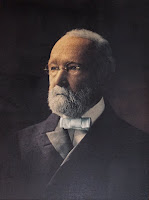
A book published earlier this year, entitled “The Enduring Struggle:  The History of the U.S. Agency for International Development and America’s Uneasy Transformation of the World, quotes the former head of the agency’s population program, Dr. Reimert Ravenholt, shown here, calling me an “anti-birth control Catholic zealot.”  Elsewhere Dr. R. has labeled me “an agent of the Vatican.”  Let me set the record straight in a year by year account of those long ago events:


1973.  That year, on behalf of the House Foreign Affairs Committee I led an onsite study of four Asian countries that had been recipients of USAID population assistance.  The study found a number of problems besetting the programs, the most serious being the waste of more than $1 million on vasectomy/IUD materials that had been left moldering unused in warehouses in South Korea and the U.S.  This was fallout from Dr. Ravenholt’s belief that simply supplying birth control materials guaranteed their use.  When the Korea Mission Director, Mike Adler, a distinguished USAID executive, said “no more,” Dr. R tried to have him fired.  Our report backed Adler strongly.  Dr. R. dismissed it as the work of “amateurs.”


1975.  I led a study of USAID family planning programs in six countries of West Africa.  Once again the report detailed problems relating to Ravenholt’s belief that supply created demand.  The program largely was ignoring concomitant health needs in woefully under-served African populations.   The report also leveled strong criticism of USAID contributions to the International Planned Parenthood Federation (IPPF) for ignoring Congressional strictures against funding abortion and for lending U.S. program funds to senior employees interest-free for personal use, also a violation of law.  By now Dr. R. was seeing me as a prime antagonist.


Early in 1976.  It came to light through the Congressional Record and subsequent news stories that in a memo Dr. R. had demanded the prime supplier of contraceptives for the USAID program produce red, white and blue condoms to celebrate the U.S. Bicentennial.  Jokes about “saluting the flag” abounded.


Later in 1976. Imagine Dr. R’s concern when the Carter Administration put me in charge of the transition at USAID.  He advanced a candidate to be his superior, someone without qualifications but in thrall to him.  That individual subsequently was turned down.  Through his brother, the staff director for a powerful senator, Dr. R made a feint at stopping my appointment as head of USAID’s Asia Bureau. It failed. 


Early in 1977.  After only a few days at the Asia Bureau, I received a communique from the mission director in Nepal saying that some 50,000 condoms foisted on him had reached their expiration date and asked my permission to burn them.  In a response entitled “The Smell of Burning Rubber,” I criticized Ravenholt’s policy that initiated the condoms and suggested instead of burning the Mission bury them.  The memo “went viral” at USAID.


Later in 1977.  Dr. R called an Asia-wide conference of all population staff that was held in the Philippines. I attended. There he proposed ending the program in Indonesia, one that in its initial stages had been promising. He likely expected I would jump at the opportunity.  No way, I responded.  We would double down on success. 


1978:  By now the Asia & Pacific Bureau was moving ahead strongly in health-integrated family planning with robust projects in Philippines, Bangladesh and Sri Lanka as well as Indonesia, a start-up in India at the government’s request, and agreement by the Catholic cardinal of the Philippines to a USAID-funded sterilization program.  Soon the Bureau would be accounted the world’s largest single purchaser of condoms and birth control pills.  Dr. R. began complaining about our spending USAID dollars he thought were his.


1979:  Dr. R contracted for and bought 250,000 “menstrual regulation kits,” a euphemism for abortion ensembles involving a variety of hard plastic instruments.  After personally examining the kits and finding that they violated the legal prohibition against abortion, I notified the Administrator who ordered that they not be used.  After they were sent to a warehouse, Dr. R complained that I was against “the most effective means of birth control.” Indeed.


1980.  Dr. Ravenholt was fired.  His assumption is that I had a hand in it.  Not true.  The impetus came from Capitol Hill where he had angered members by an inflammatory public statement that half the women of the world wanted to be sterilized.  The claim had imperiled passage of the foreign aid bill.  Dr. R’s immediate boss (Jewish) and the Deputy Administrator (Ethical Concept) lowered the axe.  I never lifted a finger.  Ravenholt had dug his own grave.  


The Rest of the Story:  In the book cited above an ally of Dr. R is quoted  saying “Both sides of the issue made tremendous mistakes.”  Wrong.  Integrating birth control with maternal and child health care, something Ravenholt distained, was the key to the successes seen throughout Asia and other parts of the world.  My particular pride is in the drastic reduction of family size in Bangladesh as contraception has been adopted. The outcome of the Asia programs should answer Dr. R’s attacks on me as an “anti-family planning Catholic zealot.”  As for being an “agent of the Vatican,” if that claim is sufficient to assure my beatification, let it be.


Note:  The 2021 book cited at the outset of this post was written by John Norris.  Although Author Norris fails to capture the spirit of the many marvelous people who have staffed USAID through the years, he provides a useful “top down” assessment of Agency policy since 1960.  


Saturday, October 9, 2021

The Changing Face of Col. E.H. Taylor Jr., Whiskey Baron


Arguably, the most important figure in the history of American distilling was Col Edmund H. Taylor Jr. of Kentucky.  During his 92 years (1830-1923) Col. Taylor came to epitomize the whiskey industry and became its chief spokesman to American presidents, the U.S. Congress and high government officials.  Because he insisted that his portrait and signature be prominent on all his products, it is possible to track Taylor’s career through his changing public face.


The earliest picture I can find of Col. Taylor is from a trade card early in his career, a time of trial.  It is the face of a early middle aged man considered a rising star in Kentucky distilling.   Taylor, however, was being squeezed financially in the Panic of 1873 and resorted to fraud, reported selling rights to 7,014 barrels of whiskey when only 4,722 barrels were aging in his warehouse.  Exposed and owing the equivalent of $11 million in current dollars, Taylor was bailed out by rival George Stagg who took over his distilleries and relegated him to being a hired hand.


Eventually paying off his debts, Taylor broke from Stagg and with his sons, built a new distillery he called “The Old Taylor Distillery Co.” in Frankfort, Kentucky.  By  this period,  the Colonel had donned spectacles and assumed the chastened look of someone who has “learned his lesson” and was seeking to regain legitimacy among his peers.  This likeness eventually would find its way onto an advertising watch fob and to the sides of cases of his straight Kentucky whiskey.


Taylor’s return to “bourbon baron” status inevitably brought him into conflict with  Stagg who had kept Taylor’s name because of his stellar reputation for bourbon.  When the Taylors opened their new facility, Stagg sued to stop them using their family name on their whiskey.   Over the next months, a legal battle was waged that ended in the Kentucky Supreme Court with a partial victory for the Taylors.  They could continue to use “Old Taylor,” but Stagg’s “Taylor” products were still allowed on the market.  Thus the emphasis emerged on using the Colonel’s face and signature to proclaim the “genuine” bourbon.  Shown below is a 1903 ad in the Wine and Spirit Bulletin declaring that only the real “Old Taylor” would carry the Colonel’s picture and script.


This introduced the era of Taylor’s aggressive look.  Characterized as “hard to get along with” and often “downright cantankerous and hard-nosed,” the distiller in this photo clearly is making a statement, squinting his eyes at the photographer and turning his mouth downward.  He was now at the top tier of Kentucky distillers and not to be trifled with.  This photo later would be translated into a digital image only slightly less intimidating.


Taylor also was having an impact in Washington, D.C.  A friend of the Secretary of the Treasury, Kentuckian John Carlyle, he played a major role in the shaping and passage of the “Bottled in Bond Act of 1897” and later in gaining support for passage of the first Food and Drugs Act.  He was lobbying Presidents Theodore Roosevelt and later William Howard Taft to declare blended whiskeys as “artificial,” a battle he ultimately lost. The Colonel Taylor shown here may reflect the demeanor of “respectful persuasion” he likely adopted when visiting the Nation’s Capitol.


As he approached an advanced age, a clear effort was made to sweeten Taylor’s image.  In the photo here, his mouth is turned down but the squint is gone.  In formal dress, the white bow tie softens his physiognomy.  Here Taylor seems to be telling us he is “The Elder Statesman” of the liquor industry.  His company used a similar photo on a paperweight.


Another late photo also emphasizes a more benign temperament on the part of the whiskey baron. He has been though a lifetime of struggles and surmounted them them all to emerged in his “golden years” respected by his peers and listened to by people in high places.  The flower in his button hole, likely lily-of-the-valley, bespeaks banking of a fiery temperment in favor of a gentle glide into old age.


Even in death, however, Colonel Taylor could not escape reproductions.  Shown here is a plaque at the present day Buffalo Trace Distillery in Frankfort.  it commemorates the O.F.C. (Old Fashioned Copper) Distillery founded by Taylor in 1870.  The face on the metal sign clearly is taken from the “aggressive” Taylor of late middle age. It even reproduces Taylor’s necktie.  If possible, it is even more baleful a look than the original.


A final look at Edmund H. Taylor, Jr., was provided in a post-Prohibition Christmas advertisement for Old Taylor Bourbon.  The theme is that while the distiller was usually hard to get along with, at the holidays a genial Taylor “gathered his loyal employees around him, and as the bottle of Old Taylor passed among them, he.d tell them, one by one how much he had appreciated all they had done.  And he’d allow himself a small smile of satisfaction.”  Presumably the portrait of Taylor shows that “small smile.”  My thought is that the distiller’s satisfaction instead may stem from being able to satisfy his staff with a swallow of  liquor and skip Christmas bonuses.  


Saturday, September 25, 2021

Family Stories: Theophilis Eaton in the New World


Theophilis Eaton probably is the family’s most famous ancestor although he is 14 generations back,  among 8,192 progenitors.  Because of his prominence in American colonial history, however,  we know a great deal about him and his life.  Shown here, Eaton was born about 1890 in Stony Stratford, England,  the son of Rev. Richard Eaton, a Puritan clergyman who originated in Coventry.    Theophilis became a successful merchant and once, ironically,  served as a commercial agent for King  Charles I at Copenhagen.   One genealogy records that he married Grace Miller in 1622.    After her death in 1826,  the very next year he married Ann Yale, a widow with three children from an earlier marriage, and the daughter of Bishop George Lloyd of Chester, England.

The Eaton name is forever linked with that of Rev. John Davenport, shown here, vicar
of a important London church, a charismatic preacher and a Puritan leader.   Eaton’s father had baptized Davenport and the two  Puritan worthies were close friends.   Davenport’s church was the center of a prosperous and strongly Nonconformist community.  The pastor himself several times was called before Church of England authorities to account for his views.    Eventually forced to flee to Holland, Davenport soon returned to England and in concert with Eaton organized a scheme of emigration to the New World.    With relatives and fellow Puritans drawn from several parts of England,  the emigrants embarked in late April, 1636,  aboard the Hector, a boat of some 250 tons.  They arrived in Boston harbor two months later, on June 26.   With them was Eaton’s wife, Ann, and her children.

Although the original idea of the company was to settle in Massachusetts and they received a warm welcome from earlier settlers, the company quickly determined that the place was not suitable.   Davenport was concerned about theological issues being debated in Boston that he found difficult.   Eaton could not find a suitable harbor along the Massachusetts coast that was not already occupied by earlier settlers.  But new opportunities beckoned.  The Pequot Indian War which began in April of 1837 with the massacre of nine white settlers,  including three women, had ended with an Indian defeat at the Battle of Great Swamp.   New areas of Connecticut now were open for colonization.   Eaton’s company settled on Quinnipiac,  the site of an abandoned Indian settlement on a spacious harbor looking south toward Long Island Sound.  A illustration captures their arrival.  That was in March 1638.   The settlers called the place “New Haven.”   They intended their community to be a Puritan theocracy in which, by its original covenant: “The word of God shall be the only rule to be attended to in ordering the affayres of government.”

A Tiffany stained glass window in Center Church in New Haven depicts the first
Christian service conducted in the settlement on Sunday,  April 1638.  The window contains 2,320 individual pieces of glass and cost $10,000 when installed in 1893.   John Davenport appears in the center of the scene, right hand pointing heavenward,  a Bible clutched in his left hand.   To his left is Theophilis Eaton,  bearing a white beard and full head of hair,  richly costumed and stately of bearing.  He holds the rounded black hat of the Puritan and what appears to be a rifle.    There they stand,  Davenport and Eaton,  Church and State united as one.  Anne may be the woman in the foreground.

Developing the New Haven Colony

These Puritan forefathers then got very busy.  From April 1638 until October 1639 the colonists lived in cave-like shelters along a creek while their town was being planned and built.  Under the direction of Eaton the town was designed around nine squares -- the first example of town planning in New England.  It included a central market and a commons known as New Haven Green that exists to this day.  Although the settlers had among them a surveyor,  historians give credit to Theophilis for the far-sighted layout.   As one has noted:  “It is impossible to conceive of any action of importance taking place during the first two decades of New Haven history without the advantages of Eatonian guidance.”  

Some of Eaton’s settlers,  probably at his urging,  moved out to establish other  Connecticut towns --  Milford,  Guilford and Stamford.  In 1640 the New Haven company purchased a tract of land across the Sound on Long Island and founded a settlement at Southold.   Other sites followed on Long Island and in Delaware as part of Governor Eaton’s grand plan to develop a network of Puritan-controlled coastal trading centers stretching from New England to the Chesapeake Bay.

In the initial years of the colony Theophilis held the title of Chief Magistrate.   With official consolidation of all Puritan holdings under the title of the New Haven Colony in 1643 he became the first governor,  a post he held until his death in 1858.   Historical accounts of his leadership are generally favorable.   Believing with his Puritan brothers that he was among the Elect and that God’s hand was guiding him and his fellows much as God had guided the Israelites in the desert,  Eaton had enormous confidence that his actions were divinely ordained.

With power came wealth.   Eaton built a mansion at a spot that is now the north corner of Elm and Orange Streets in New Haven.   Shown below, it was a common form of manor houses of England at the time.  Contemporaries characterized it as “large and lofty”  with two full stories and a large attic.   It is said to have had 21 fireplaces,  although later authors have disputed that total.  Although Rev. Davenport and one or two other Puritan worthies had large houses,  Theophilis’ was the most impressive in New Haven.   No records exist of its destruction but it was gone by 1730.  

 In Eaton,  as with many Puritans,  there was a strong mix of the secular and the sacred.  The famous American preacher Cotton Mather mentions with approval the tradition in the Eaton household wherein the “pater familias" would call together the children every Sunday evening to see how well they had paid attention to the sermon of the day,  pointing out “in an obliging manner”  difficult theological points and applying the doctrines to the children’s lives.  With that attitude it is no wonder that in 1656 Eaton drafted a strict code of laws for the New Haven Colony.   Drawn on Biblical injunctions and aimed at dictating personal conduct,  this screed subsequently became the basis of many New England “blue laws.”

Trouble in Paradise

Wealthy, living in a large home of 10 rooms with five chimneys and multiple
fireplaces,  an unquestioned leaders apparently thoroughly in charge of his situation,  Theophilis should have been a satisfied man.   But the cankerworm of religious dissent,  so much a part of the Puritan rebellion,  was now gnawing at the vital center of his own family.     Our ancestor  Ann Yale Eaton had been converted to Anabaptism,  the forerunner of the Baptist denomination, after she had accepted the teachings of Lady Deborah Moody, shown here, described by one author as a “wise and anciently religious woman.”  This conversion was no small matter.  Ann’s descent into heresy was not only a religious offense but a serious civil crime.

Why did Ann take such a scandalous step to rebel against the beliefs of her distinguished husband and his colleagues?    One account has her overburdened by a household of some 30 people,  relatives of her own and of her husband.  Anne’s inlaws, including Theophilis’ mother and a daughter from his first marriage, are portrayed as strongly antagonistic to her.   Theophilis is reputed often to have sided with his “flesh and blood” against Ann,  largely ignoring her companionship and confiding entirely in his friend,  Rev.  Davenport.  Presumably looking for a way to express her frustration, Ann stopped coming to communion services.  Then word got around that she had converted to heretical Anabaptism .  There ensued,  according to one story,  a confrontation with Rev.  Davenport who subsequently brought her before the church court on 17 charges, including the unspeakable crime of criticizing a minister.

The power of the Puritan clergy had reached a height reminiscent of prelates in fundamentalist Moslem countries of our own day.    Each of the towns in the New Haven colony was governed by seven clergymen magistrates known as “Pillars of the Church.”  None but church members were their electors, thereby disenfranchising at least half the settlers.   These magistrates also served as judges.   Trial by jury,  an established English tradition,  had been dispensed with by the Puritans since no authority could be found for it in the laws of Moses.    Consider then the pain and embarrassment that Theophilis must have felt when his wife, the mother of his children, was called up before this tribunal.   If Ann had been a lesser light in the community,  the Puritan magistrates might have had her publicly whipped and banished her from the colony.  As the wife of the governor she simply was convicted of lying (her religious dissent being the real charge)  and excommunicated from the Puritan church.

In his book “The First Frontier” author Roy Coleman portrays a scene in which John Davenport is presiding in the New Haven Green meeting house and before him sits the Right Worshipful Governor Eaton and a group of other New Haven worthies.   But the wife of the governor has no assigned seat.   She is no longer a member of the church, having been excommunicated.  Ann Yale Eaton sits among the non-members.  “Gossip said that she was asking the Governor for a separate room,”  says Coleman.   After the death of Theophilis she soon returned to England where she died in 1659.  With her on the trip back was Elihu Yale, 11,  a grandson out of her first marriage.   He  eventually would finance the founding of Yale College, now Yale University.  The univerrsity is literally a stone’s throw from the scene of his grandmother’s trial.


Saturday, September 11, 2021

Charles Dickens in the Round

During recent years I have sold or given away the bulk of a collection of vintage whiskey containers but have never been able to part with set of china mini-jugs issued about the mid-1980s by the Pick Kwik Wine & Spirits Co. of Derby, England.  In marvelously realized underglaze transfers they dramatize scenes from novels by Charles Dickens to advertise Pickwick Scotch Whiskey.  The base identifies the maker as the John Humphrey Pottery of Stafford, England.

Although virtually all of Dicken’s novels contained line illustrations, over time they represented the work of a number of artists whose styles while differing slightly are similar.  Rendered in black, blue and brown, the images viewed here “in the round” are generally faithful to the original drawings.  With each jug holding at most two or three swallows of whiskey, they are a unique advertising issue.


Appropriately, three of the mini-jugs display scenes from Dicken’s first novel, “The Pickwick Papers,” a runaway success that almost overnight made him a super-star of English literature.  The story follows the adventures of Samuel Pickwick, a genial and wealthy old gentleman, sometimes guilty of over-imbibing, who is the founder and president of the Pickwick Club.  A jug shows him addressing the small gathering suggesting that he and three other "Pickwickians" should make journeys to locales away from London and report on their findings to the other members of the club.  The travels of Pickwick and his friends throughout the English countryside by coach provide the chief subject matter of the novel.


Another jug is entitled “The first appearance of Mr. Samuel Weller.”  Sam does not appear until Chapter 10 when Pickwick meets him working at a tavern and takes him on as a personal servant and companion on his travels.  While Pickwick is a character having an almost childlike simplicity, Weller, a Cockney, is ‘street-wise’. Weller is the more experienced of the two despite his youth and the most intelligent character in the novel.  Sam becomes deeply attached  to the elderly gentleman and helps him in a variety of difficulties.


The most dire of these is Pickwick’s entanglement with a widow, Mrs. Bardell. As his landlady: “She waited on him, attended to his comforts, cooked his meals, looked out his linen for the washer-woman when it went abroad, darned, aired, and prepared it for his wear when it came home, and, in short, enjoyed his fullest trust and confidence.”  Then she misconstrued some of his remarks as a proposal of marriage and swooned in his arms.  Her suit for breach of promise later bankrupted both, sending them to debtor’s prison.


Four jugs commemorate another famous Dickens novel, “Oliver Twist.”  One is entitled “Mr. Bumble is degraded in the eyes of the Paupers.”   Bumble is the cruel and self-important official who oversees the parish workhouse and orphanage of Mudfog, a country town more than 75 miles from London where the orphaned Oliver Twist is brought up.  After marrying the widowed matron of the workhouse, Bumble finds out that his new wife is a sharp-tongued and tyrannical woman who nags and browbeats him in front of workhouse residents.


The other three jugs commemorate Oliver’s sojourn with the master thief, Fagin, and his band of street boys who pickpocket and commit other street crimes.  Shown here, Oliver is being introduced to Fagin and the gang.  Fagin is portrayed as a criminal mastermind who kidnaps orphaned children and trains them to be thieves in return for sheltering and feeding them.  He keeps the money for himself.  Next to him is his chief lieutenant, known as “The Artful Dodger.”  Dodger, characterized as a child who acts like an adult, wearing adult clothes that are too large for him. 


Another of the gang is Charles Bates, shown here talking to Oliver about the fine points of professional thievery.  He is the only member of Fagin's gang to reform. In the final chapter Dickens states that Charley left London to work as a farm hand, later becoming a shepherd.  Dicken wrote: ”Master Charles Bates…fell into a train of reflection whether an honest life was not, after all, the best. Arriving at the conclusion that it certainly was, he turned his back upon the scenes of the past, resolved to amend it in some new sphere of action.


The last Oliver Twist jug depicts one of the most chilling scenes in all of English literature:  the murder of Nancy,  who has been deeply protective of Oliver, by the brutal Bill Sikes, an adult criminal associated with Fagin who believes Nancy has betrayed the gang.   Nancy is portrayed as highly sympathetic and readers have been known to weep at reading Dickens wrenching description of her demise.  


The last jug is a reference to Dicken’s 1850 novel,
 David Copperfield, but has nothing to do with the story.  On the left is Wilkins Micawber, one of the author’s most delightful characters.  Often down on his luck financially, Mr. Micawber is known for his optimism, identified with the belief that "something will turn up." In this depiction he is telling Copperfield, far left, “David, this whiskey is superb.”

Note:  This is the second article on this blog to feature Samuel Pickwick and whiskey.  A post on August 14, 2015, describes his general association with strong drink through the years.  It is entitled:  “Mr. Pickwick — ‘The Old Gentleman’ Advertising Alcohol.”  


Saturday, August 28, 2021

A Disaster Unfolding: That Day in Cambodia


Foreword:  As the chaotic U.S. withdrawal from Afghanistan plays out, I am cast back in memory to the final days of the United States in Cambodia.  It has been 46 years since the United States with allies evacuated Phnom Penh (above) as a hostile force advanced, an event I remember vividly. The story is one I have never before put to paper.  Now seems the time.


In December 1971 the Chairman of the House Foreign Affairs Committee, where I was a staff assistant, asked me and a French-speaking colleague to do fact-finding on the conflict there by going to Cambodia.  The experience clearly indicated the follies of U.S. intervention.  Our critical report, to my chagrin, was quashed by the Nixon Administration and never officially published.  From then on, however, I continued to be involved with Cambodia, including a mission there in 1974 and frequent contact with its embassy.


In 1975 the situation declined swiftly.  An indigenous radical Communist force, known as “The Khmer Rouge” had taken over virtually all of Cambodia, leaving only the capital Phnom Penh in the hands of the U.S.-installed government.  The population of the city was being reached with food and other supplies only by daily airlifts from Saigon.  Nixon recently had resigned and Gerald Ford was President.


At home one evening in February 1975, I received a telephone call from a colleague telling me that as a last-ditch effort, the White House was recruiting a delegation of Senate and House members to go to Indochina and had requested that I be among the small staff accompanying them.  My wife was furious, demanding:  “What are you, some kind of lap dog of Gerry Ford?”  Nonetheless, with a partner, Jack Brady, I went.


Our group flew into Phnom Penh in a small Air America (CIA) passenger plane that was obliged to “corkscrew” its landing because of fear of taking fire from the periphery of the airport.  The U.S. Ambassador, John Gunther Dean, shown herein a suit, was there to meet us.  As I emerged from the plane he lowered his coat and said:  “Stab me again, Sullivan.”  His reference was immediately clear. In a report to Congress a year earlier I had documented that the embassy was evading a Congressional restriction on the numbers of American officials who could be in country by sending personnel to Saigon every night and returning them in the morning. It caused a ruckus on Capitol Hill.


Ours was a one-day investigation, it being considered too dangerous for the delegation to stay overnight.   After an Embassy briefing I accompanied some of the members to the airport warehouses and defense perimeter.  Pallets of food stretched for yards, defended by adolescent boys with antiquated rifles. “Look at these soldiers,” enthused a South Carolina Republican, “I’ll bet they can put up a fierce fight!”  Astounded I replied:  “Congressmen, these are children!”


From there Brady and I went off for a private briefing by the CIA station chief and his staff. It was sobering. They described the killings and other brutality that the Khmer Rouge was inflicting on the people they controlled, even among groups allied with them.  Their victory, our briefers predicted, would be followed by a bloodbath.  We believed them and meeting the delegation for an official lunch passed on the information.  Congresswoman Bella Abzug responded:  “Why am I hearing these unacceptable things from guys I like.”  Her similar intransigence during the meal caused the Cambodian Army Chief of Staff to weep.


The post-lunch discussion broke up suddenly as the warning came of an incoming rocket.  Taking cover, we heard one explode not far from where we were gathered.  Brady and I then left the delegation for a useless U.S. military briefing.  We split and I met solo with a group of U.S. NGO representatives about their plans for getting their people out of the country.  Late in the afternoon I headed alone back to the airport in a car and armed escort provided by the Cambodian army.  As we drove, suddenly the sound of continuous rifle shots had me ducking to the floor.  It was “friendly” fire.  My escorts were discharging their weapons in the air to clear the two-lane road of a multitude of people, some with luggage, apparently hoping to leave the country.  


I was the first to arrive at the landing area where the Air America plane would pick us up.  As I stood waiting, a Cambodian soldier who spoke English approached and said:  “Sir, please get under that truck,” pointing out a military vehicle standing nearby.  “We have incoming rockets.”   By stooping low, I complied and upon looking up saw the Foreign Minister, Long Boret, crouched beside me. He had come to see us off. We exchanged greetings.  Luckily, no rockets appeared.  Soon the delegation, my partner, and the airplane arrived.  Hot, tired and tense we boarded without conversation, corkscrewed our way into the air, and headed back to Saigon.


Upon returning to Washington it fell to me to draft legislation desired by the Administration to salvage something out of this impending debacle.  The delegation and other members assembled to provide input.  When no consensus emerged, the final draft was rendered nothing but an accumulation of meaningless phrases.  No member could be found to introduce it. 


Within a few days Ambassador Dean with his staff, a few high-ranking Khmer officials and others were flown out of Phnom Penh by Marine helicopters.  The Khmer Rouge entered the city and began their reign of terror during which an estimated 1,000,000 Cambodians died, either murdered or from starvation.


I often look at an elaborately decorated silver box displayed on a table in our living room.  It was gift from Prince Sirik Matak, then Prime Minister of Cambodia, when I met with him during my 1974 mission.  Inside is a slip of paper with an excerpt from a letter that he wrote Ambassador Dean near the end:  ”I never believed for a moment that you have this sentiment of abandoning a people which has chosen liberty. I have only committed this mistake of believing in you the Americans.”   Refusing to be evacuated, Sirik Matak was executed by the Khmer Rouge on April 21, 1975. 


A former U.S. military adviser in Cambodia has said it well: "The downfall of the Khmer Republic not only resulted in the deaths of countless Cambodians, it has also crept into our souls.”


Note:  Because of the nature of the trip I took few photos.  Those of our arrival and departure are mine.  The others are stock photos.