The regional entities of U.S. labor unions for years operated U.S.-funded programs to strengthen the free labor movements in dozens of countries around the world. Unlike most USAID grantees, the AFL-CIO had gained the right to approve individuals sent to evaluate the effectiveness of their programs. My credentials as a former member of the American Newspaper Guild proved useful for obtaining consultant contracts to provide labor-based evaluations and related services.

In January 1990 I found myself in South Africa at the head of a team of three to evaluate the African Free Labor Institute (AFLI) program there. This was still the “bad old” days. Apartheid was in full force. AFLI officials were barred from visiting South Africa and did business from nearby Lesotho. USAID maintained a mission in Pretoria, however, and we were given visas. Shown here is a photo of our group: from right, Dr. Jerry Barrett, a labor specialist; Ann Mullins, a local woman with ties to the black labor movement, and me.

 The evaluation took us to several major cities where we interviewed dozens of trade union officials, some of them white or of mixed race. A number were well known for their opposition to the de Klerk government. On occasion we met with union officials late at night at locations down dark alleys. Among them was Cyril Ramaphosa, the current President of South Africa, shown here.
 It took several days to realize that our team was being followed by de Klerk government agents everywhere we went. The first glimmer occurred in Durban. We hailed a cab outside our hotel and kept it with us much of the day. The next day, the same driver -- a tall mixed race man about 45 -- was waiting at the door of the hotel to drive us again. “Did any of you ask him to come back this morning?” I asked other team members. No one could remember doing so, nonetheless we made use of his services for the second day.
 Our next stop was Capetown, a hotbed of dissent against the discriminatory labor laws of South Africa. We took a cab, apparently at random from the taxi stand in front of our hotel, shown here, out to the University of Capetown. I told the driver -- a white Afrikaner -- not to wait and that we would call for another taxi as we were leaving. A university official called the cab company for us -- and the same driver showed up. That seemed a little unusual, but we took him anyway.
On the way back downtown we stopped for lunch at a well-known outdoor restaurant. The Afrikaner, a stocky laconic sort, said he would wait in the parking lot located on a hillside above the eatery. After ordering my meal, I rounded the restaurant to find a restroom and noticed our driver standing at the edge of the parking lot. He was looking down at our table intently -- with binoculars.
Cautioning my colleagues against making any ill-advised remarks in the cab, we went back to town. The next day our driver, again apparently one we picked at random, was a young man of mixed race in a cab with a broken door handle. Like the others, he stayed most of the day with us. The next day the driver was different but the cab and the door handle were the same. No doubt a vehicle with a recording device.
When the time came to fly back to Johannesburg, Jerry Barrett went ahead to the airport. He later called my room: “I suspect you will be getting an Indian driver who will ask a lot of provocative questions about your attitude toward the South African Government. He pestered me all the way out here.”
 True to form, when I emerged from the hotel later that day with my luggage, the first cab in the queue was being driven by an Indian. I got in. He immediately began to bombarded me with questions about apartheid, the government, and race relations. To all his inquiries I replied that we were in the country to learn, not to make political statements. I tried to speak directly into the dashboard.
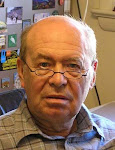
  After landing at Jan Smuts Airport, Jerry and I went our separate ways. He to Johannesburg to give a talk and I to Pretoria to have dinner at the home of the U.S. Mission Director, an old friend, Dennis Barrett (no relation to Jerry), shown here. While waiting for a bus to town I noticed a burly, very bald, white man looking intently at me from a single automobile standing in a clearly marked “no parking” zone. I stared hard at him for several minutes. He bolted out of the car and into a nearby building where he continued to watch me through a window. The bus arrived and I waved a jaunty goodbye. At dinner that night Dennis, shown above, confirmed that he too was shadowed wherever he went and that he had gotten to know several of his “tails” by sight.
The following day as our team boarded an aircraft to take us to London, a large white van pulled up on the tarmac next to the plane. The driver was looking at me intently. It was the same bald man. As I walked up the stairs to the door of the aircraft, I turned and waved at him again. Once again he failed to wave back. The entire experience seemed like something from a John LeCarre novel.
 Things changed dramatically after Nelson Mandela was released from prison and subsequently was elected President of South Africa. In 1995 I returned for another evaluation and found that several labor leaders we had met five years earlier now were cabinet ministers. Jay Naidoo, whom we had interviewed, now was Labor Minister and had crafted a new labor law. He made me a guest at the formal rollout of the new law, one that eliminated the discriminatory processes of the old regime and opened a new era in South African labor affairs. Being invited was a singular honor. This time I was not followed.


